Pay-Per-Click (PPC) advertising has become an important part of digital marketing because businesses want to reach potential customers, generate quality leads and increase online sales. If you are wondering what jobs you can get after a PPC course, there are several career opportunities to explore in this growing field. Companies across different industries use paid advertising platforms such as Google Ads, Microsoft Advertising, Facebook Ads and Instagram Ads to promote their products and services. As businesses continue to invest in online advertising, the demand for professionals with paid advertising skills is also growing.
If you are planning to enter the digital marketing industry, understanding the career opportunities after a PPC course can help you choose the right career path. A PPC course introduces you to essential concepts such as keyword research, campaign creation, audience targeting, bidding strategies, ad copywriting, conversion tracking and campaign optimisation. These skills can prepare you for entry-level positions as well as specialised advertising roles. Let’s explore the different job opportunities, required skills, salary expectations and career growth options available after completing a PPC course.
What Is PPC Advertising and Why Is It a Valuable Career Skill?
Pay-Per-Click advertising is a digital marketing model in which advertisers pay a certain amount whenever someone clicks on their online advertisement. These advertisements usually appear on search engines, social media platforms, websites and other digital channels. For example, when someone searches for a product on Google, sponsored advertisements may appear above or below the organic search results. Businesses use these advertisements to attract relevant visitors and encourage them to take actions such as purchasing a product, filling out a form or contacting a company.
PPC advertising is a valuable career skill because it helps businesses connect with audiences who are actively searching for particular products or services. Unlike some traditional marketing methods, paid advertising campaigns provide measurable performance data, allowing marketers to understand how their budgets are being used. Professionals can analyse impressions, clicks, cost per click (CPC), conversion rates and return on ad spend (ROAS) to evaluate campaign performance. Learning these concepts through a PPC course can help beginners develop practical advertising skills and explore different opportunities in the digital marketing industry.
Why Are Businesses Hiring PPC Professionals?
Businesses hire PPC professionals to plan, manage and improve their paid advertising campaigns. These specialists help companies reach the right audience, control advertising costs and generate measurable business results. Their responsibilities may include selecting relevant keywords, writing advertisements, managing bids, and analysing campaign performance.
The growing use of online shopping, search engines and social media has increased the importance of paid advertising. Small businesses, startups, digital marketing agencies and large organisations all require professionals who understand advertising platforms. This creates opportunities for trained individuals who can combine analytical thinking, creativity and marketing knowledge.
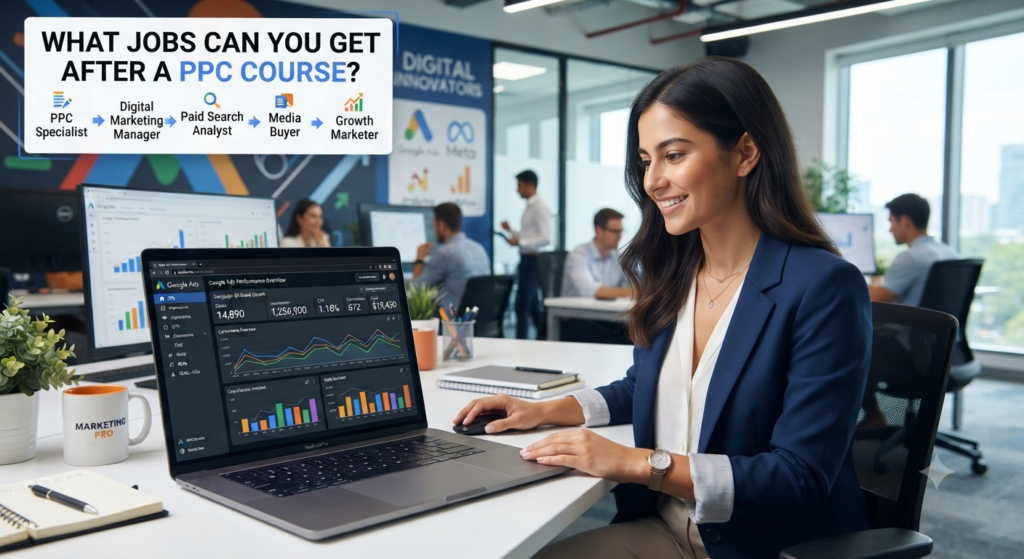
What Jobs Can You Get After a PPC Course?
Completing a PPC course can help you qualify for several entry-level and specialised positions in digital advertising. The exact job opportunities depend on your practical knowledge, platform expertise, communication skills and previous experience. Beginners can start with campaign management and advertising support roles before moving into more specialised positions.
1. PPC Executive
A PPC Executive manages paid advertising campaigns across platforms such as Google Ads and Microsoft Advertising. This is one of the most suitable starting positions for individuals who have completed a PPC course and want to gain practical experience. Their primary responsibility is to help businesses generate website traffic, enquiries and conversions through paid advertisements.
- Keyword Research: Identify relevant search terms that potential customers use when looking for products or services. Select keywords according to search intent, competition and advertising objectives.
- Campaign Creation: Set up search, display and other advertising campaigns based on client requirements. Organise campaigns into suitable ad groups with relevant keywords and advertisements.
- Ad Copywriting: Write clear and engaging advertisement headlines and descriptions. Highlight product benefits, offers, and calls to action to encourage users to click.
- Budget Management: Monitor daily and monthly advertising budgets. Adjust bids and spending according to campaign performance and business objectives.
- Performance Monitoring: Track impressions, clicks, CPC and conversions to understand how campaigns are performing. Identify areas that require improvement.
- Campaign Optimisation: Test different advertisements, keywords and bidding strategies. Make regular adjustments to improve results and reduce unnecessary advertising expenses.
2. Google Ads Specialist
A Google Ads Specialist focuses on planning, creating and managing advertisements across Google’s advertising network. These professionals work with different campaign types, including Search, Display, Shopping, Video and Performance Max campaigns. They understand how Google’s advertising system works and use campaign data to improve advertising performance.
After gaining experience with Google Ads through a PPC course, you can develop expertise in keyword targeting, audience segmentation, conversion tracking and bidding strategies. Google Ads Specialists also conduct competitor research and analyse search terms to identify opportunities for better campaign performance. Businesses often hire these professionals to generate qualified leads, increase website traffic and improve online sales through Google advertising.
3. Paid Media Executive
A Paid Media Executive manages advertising campaigns across multiple paid digital channels. Unlike a professional who works exclusively with Google Ads, a paid media specialist may handle campaigns on Facebook, Instagram, LinkedIn, YouTube and other advertising platforms. Their objective is to reach the right audience through suitable advertising channels.
This role requires knowledge of audience targeting, advertising budgets, campaign planning and performance analysis. Paid Media Executives regularly monitor campaign results and identify which platforms are delivering better outcomes. Learning PPC advertising alongside social media advertising can help beginners prepare for this position and expand their career opportunities in digital marketing agencies and corporate marketing departments.
4. SEM Specialist
A Search Engine Marketing (SEM) Specialist focuses on increasing website visibility through paid search advertising. They research keywords, develop advertising strategies, create search campaigns and monitor their performance. Their work often involves understanding how paid search advertisements complement organic search engine optimisation (SEO).
Professionals in this role need knowledge of keyword match types, negative keywords, search intent, bidding strategies and landing page relevance. They also analyse campaign metrics to identify opportunities for improving click-through rates and conversions. A combination of PPC and SEO knowledge can be particularly useful for individuals who want to build a career in search engine marketing.
5. Performance Marketing Executive
A Performance Marketing Executive works on digital campaigns that are designed to achieve measurable business objectives. These objectives may include lead generation, product purchases, app installations, registrations and customer enquiries. The role involves managing paid campaigns while continuously evaluating their performance.
Professionals in this position use data to understand which advertisements, audiences and channels deliver the best results. They may work with Google Ads, Meta Ads, analytics platforms and conversion tracking tools. A PPC course provides a useful foundation for this career, while additional knowledge of analytics, landing page optimisation and marketing funnels can help professionals develop further.
6. Social Media Advertising Specialist
A Social Media Advertising Specialist creates and manages paid campaigns on platforms such as Facebook, Instagram, LinkedIn and other social networks. These professionals help businesses reach specific audiences based on demographics, interests, behaviours and other targeting options. Their responsibilities also include selecting suitable advertising formats and creating campaigns according to marketing goals.
A PPC course that covers paid social advertising can help beginners understand campaign structures, audience targeting, budget allocation and ad performance. However, this role also requires creativity because advertisements need attractive visuals, engaging messages and relevant calls to action. Knowledge of social media marketing, content strategy and basic graphic design can provide an additional advantage.
7. PPC Analyst
A PPC Analyst focuses on collecting, analysing and interpreting paid advertising data. Their main responsibility is to understand campaign performance and provide recommendations for improving advertising results. They study metrics such as CPC, CTR, conversion rate, cost per acquisition (CPA), and return on ad spend.
This role is suitable for individuals who enjoy working with numbers and identifying performance trends. PPC Analysts prepare campaign reports, compare advertising results and identify areas where businesses can improve their spending. Knowledge of Google Analytics, Google Ads reporting, Excel and Looker Studio can help professionals become more effective in this position.
8. Freelance PPC Specialist
A Freelance PPC Specialist provides paid advertising services to clients on a project or contract basis. Instead of working permanently for one company, freelancers can manage campaigns for multiple businesses, startups and entrepreneurs. They may offer services such as Google Ads management, keyword research, campaign setup, conversion tracking and monthly performance reporting.
Completing a PPC course can provide the foundation required to explore freelancing, but practical experience is important before managing client advertising budgets independently. Beginners can start by creating sample campaigns, practising with demonstration projects and developing a portfolio. As their experience grows, they can work with clients from different industries and offer specialised advertising services.
What Skills Do You Need to Get a Job After a PPC Course?
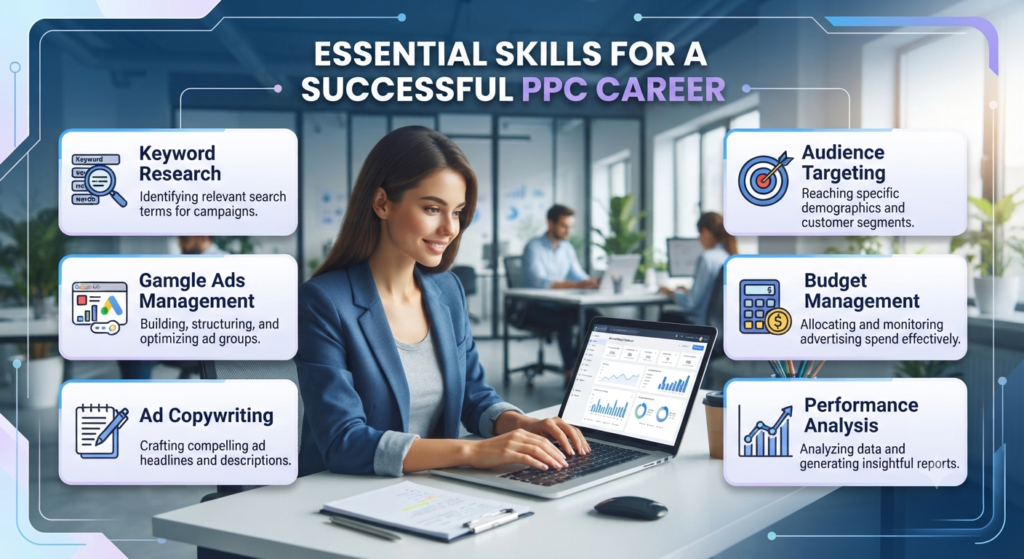
Completing a PPC course introduces you to paid advertising concepts, but employers also look for candidates who can apply their knowledge to real campaigns. Developing a combination of technical, analytical and communication skills can improve your chances of getting hired. These skills help professionals manage advertising budgets, understand customer behaviour and achieve marketing objectives.
1. Keyword Research and Search Intent
Keyword research is one of the most important skills for search advertising. You should understand how to identify relevant keywords, analyse search intent and select suitable keyword match types. Learning to use keyword research tools can also help you understand search volume, competition and advertising opportunities.
2. Google Ads Campaign Management
You should know how to create and manage different types of Google Ads campaigns. This includes understanding campaign settings, ad groups, keyword targeting, bidding strategies and budget allocation. Practical knowledge of the Google Ads platform can help you prepare for entry-level PPC positions.
3. Ad Copywriting
Writing effective advertisement copy is essential for attracting potential customers. You should be able to create relevant headlines, descriptions and calls to action that communicate the value of a product or service. Strong writing skills can help improve advertisement relevance and encourage users to take action.
4. Audience Targeting
Audience targeting helps advertisers reach people who are more likely to be interested in their products or services. You should understand demographic targeting, location targeting, interest-based targeting and remarketing. These skills are particularly useful for search and social media advertising campaigns.
5. Budget and Bid Management
PPC professionals need to understand how advertising budgets and bidding strategies work. You should know how to monitor spending, adjust bids and select appropriate bidding methods according to campaign goals. Effective budget management helps businesses avoid unnecessary advertising expenses.
6. Data Analysis and Reporting
Understanding advertising metrics is important for evaluating campaign performance. You should be familiar with CPC, CTR, CPA, conversion rate and ROAS. Knowledge of Google Analytics, Google Ads reports, Excel and Looker Studio can help you analyse results and communicate performance insights.
Which Tools Should You Learn After Completing a PPC Course?
Learning advertising tools is important because PPC professionals use different platforms to create campaigns, analyse performance and manage advertising activities. A good understanding of these tools can help you work more efficiently and become familiar with industry practices. You do not need to master every platform immediately, but learning the commonly used tools can improve your job readiness.
1. Google Ads
Google Ads is an essential platform for managing paid search, display, video, shopping and other advertising campaigns. Learn how to create campaigns, select keywords, write advertisements, manage bids and monitor conversions. Practical experience with Google Ads can help you prepare for PPC Executive and Google Ads Specialist roles.
2. Google Analytics 4
Google Analytics 4 helps marketers understand how visitors interact with their websites and applications. It provides information about traffic sources, user behaviour, engagement and conversions. PPC professionals can use this data to evaluate the quality of traffic generated through advertising campaigns.
3. Google Keyword Planner
Google Keyword Planner is a keyword research tool available through Google Ads. It helps advertisers discover keyword ideas and understand estimated search volumes and competition. Learning this tool can help you select relevant keywords for paid search campaigns.
4. Meta Ads Manager
Meta Ads Manager is used to create and manage paid advertisements across Facebook and Instagram. It provides options for audience targeting, campaign objectives, budget management and performance tracking. Understanding this platform can help you explore social media advertising opportunities.
5. Microsoft Advertising
Microsoft Advertising allows businesses to display paid advertisements across Microsoft’s search network and partner platforms. Learning this tool can help you understand advertising beyond Google and expand your knowledge of search engine marketing.
6. Looker Studio
Looker Studio helps marketers create reports and dashboards using advertising and website performance data. It makes it easier to present campaign results through charts, tables and visual reports. Knowledge of reporting tools can be useful for PPC Analysts and Performance Marketing Executives.
What Is the Salary After a PPC Course?
The salary after a PPC course depends on several factors, including your practical experience, technical skills, location, company size and job responsibilities. Completing a course does not automatically guarantee a particular salary. However, candidates who understand campaign management, keyword research, conversion tracking and advertising analytics may find more opportunities than those with only theoretical knowledge.
In India, entry-level PPC and digital advertising positions may offer approximately ₹2.0 lakh to ₹4.0 lakh per year, depending on the employer and candidate’s capabilities. With relevant experience and specialised knowledge, professionals may move towards higher-paying positions in performance marketing, paid media and campaign management. The following figures are indicative estimates rather than guaranteed salary ranges.
Factors That Influence Your PPC Salary
- Practical Experience: Candidates with hands-on campaign management experience may have an advantage over those who have only completed theoretical training.
- Platform Knowledge: Knowledge of Google Ads, Meta Ads and Microsoft Advertising can make you suitable for a wider range of positions. Specialised knowledge of conversion tracking and analytics can also improve your professional value.
- Industry and Company Size: Digital marketing agencies, ecommerce businesses, technology companies and large organisations may have different salary structures.
- Location and Remote Opportunities: Salaries may vary depending on the city, company and employment arrangement. Professionals working with international clients or specialised agencies may find different earning opportunities.
Can Beginners Get a Job After Completing a PPC Course?
Yes, beginners can apply for entry-level PPC jobs after completing a PPC course, provided they have developed a basic understanding of paid advertising and can demonstrate their practical skills. Many digital marketing agencies and businesses hire freshers for positions such as PPC Trainee, Digital Marketing Executive and Junior PPC Executive. These positions allow beginners to learn campaign management while working under experienced professionals.
However, completing a course alone may not be sufficient to secure a job. Employers often want to know whether you understand how to conduct keyword research, create advertisements, select bidding strategies and monitor campaign performance. Developing sample campaigns, completing practical assignments and earning relevant certifications can help demonstrate your knowledge. You should also prepare to explain basic advertising metrics and campaign optimisation methods during interviews.
How Can Freshers Prepare for PPC Jobs?
- Complete Practical Projects: Create sample search and social media advertising campaigns to understand how different campaign settings work.
- Build a PPC Portfolio: Include sample keyword research, campaign structures, advertisement copies and reporting dashboards. A portfolio can help recruiters understand your practical knowledge.
- Earn Relevant Certifications: Consider completing Google Ads certifications through Google Skillshop. These certifications can demonstrate your understanding of Google’s advertising products.
- Learn Basic Analytics: Understand how to measure clicks, impressions, conversions and advertising costs. This knowledge can help you answer technical questions during interviews.
- Apply for Internship Opportunities: PPC internships provide opportunities to work on real advertising tasks under professional supervision. They can also help you gain industry experience.
- Prepare for Interviews: Practise explaining keyword match types, bidding strategies, campaign structures and conversion tracking. Clear explanations can help you demonstrate your understanding of PPC fundamentals.
What Is the Difference Between PPC, SEM and Performance Marketing Jobs?
PPC, SEM and performance marketing are closely related areas of digital marketing, but they do not have exactly the same responsibilities. Understanding these differences can help you choose a career path that matches your interests and professional goals. Although these roles may involve similar advertising platforms, their focus and scope can vary depending on the organisation.
PPC primarily focuses on paid advertisements where advertisers pay for clicks or other advertising interactions, depending on the campaign model. SEM generally refers to search engine marketing and includes activities designed to increase visibility through paid search advertising, while its broader industry usage may also overlap with SEO. Performance marketing has a wider scope because it focuses on measurable results across multiple paid marketing channels, including search, social media, display and affiliate advertising.
Key Differences Between These Career Options
- PPC (Pay-Per-Click): Focuses on managing paid advertising campaigns where businesses pay for clicks or other advertising interactions. Responsibilities include keyword research, bid management, ad creation and campaign optimisation.
- SEM (Search Engine Marketing): Focuses on improving website visibility through paid search advertising. Responsibilities include search campaign management, keyword targeting, competitor analysis and search marketing strategies.
- Performance Marketing: Focuses on achieving measurable business results through multiple digital advertising channels. Responsibilities include managing campaigns, analysing conversions, improving ROI and optimising advertising performance.
How Can You Build a Successful Career After a PPC Course?
Building a successful career after a PPC course requires continuous learning, practical experience and an understanding of changing advertising platforms. Digital advertising tools and campaign features are regularly updated, so professionals need to stay informed about new developments. Developing a structured learning plan can help you move from beginner-level knowledge to professional campaign management.
Instead of focusing only on completing a course, try to understand how businesses use advertising to achieve their marketing objectives. Learn how to identify the right audience, develop effective advertisements, track conversions and analyse campaign results. The following steps can help you build a strong foundation for a long-term career in paid advertising.
1. Start with the Fundamentals of PPC
Begin by understanding the basic concepts of paid advertising, including how advertising auctions work, what keywords are and how different campaign types function. Learn about CPC, CTR, impressions, conversions and quality-related advertising concepts. A strong understanding of these fundamentals will make it easier to work with advertising platforms.
2. Practise with Advertising Platforms
Spend time exploring Google Ads and Meta Ads Manager to understand their features and campaign settings. Practise creating sample campaigns, selecting target audiences and writing advertisement copies. Practical learning can help you become more comfortable with the tools used by digital marketing professionals.
3. Develop Your Analytical Skills
PPC is a data-driven field, so you should learn how to interpret campaign reports and identify performance trends. Understand how changes in keywords, bids, advertisements and landing pages can affect campaign results. Developing analytical skills can prepare you for specialist and performance marketing positions.
4. Learn Conversion Tracking
Conversion tracking helps advertisers understand whether their campaigns are generating meaningful actions. These actions may include purchases, form submissions, phone calls or registrations. Learning to set up and analyse conversion tracking can make you more valuable to employers because it connects advertising activities with business outcomes.
5. Gain Experience Through Internships and Projects
Look for digital marketing internships, trainee positions and opportunities to assist experienced advertising professionals. Working on practical projects can help you understand campaign planning, budget management and performance reporting. You can also document your learning and sample projects in a professional portfolio.
6. Keep Learning and Expanding Your Skills
Once you understand PPC fundamentals, explore related areas such as SEO, content marketing, social media marketing, landing page optimisation and marketing automation. These additional skills can help you understand the complete digital marketing process. Continuous learning can also prepare you for senior PPC, paid media and performance marketing roles.
Conclusion
Completing a PPC course can open the door to several career opportunities in the digital marketing industry. From becoming a PPC Executive or Google Ads Specialist to exploring roles in paid media, search engine marketing and performance marketing, there are different paths for beginners and experienced professionals. However, building a successful career requires more than theoretical knowledge. You should develop practical skills in keyword research, campaign management, ad copywriting, audience targeting, conversion tracking and performance analysis.
If you are planning to start your career in paid advertising, focus on gaining hands-on experience through practical projects, internships and relevant certifications. Keep learning about new advertising tools and industry trends to improve your expertise. With consistent practice and the right skills, you can build a rewarding career in PPC advertising and grow towards specialised or senior-level digital marketing positions.
Explore Our Recent Blog
- Google Ads Course Syllabus for Beginners
- Is Digital Marketing a Good Career in 2026?
- Digital Marketing Tools Every Beginner Should Learn
- Practical Skills You Learn in a Digital Marketing Course
- PPC Skills Every Beginner Should Learn
Frequently Asked Questions
1. What is the best job after completing a PPC course?
The best job depends on your interests, skills and career goals. PPC Executive and Google Ads Specialist are suitable starting positions for beginners who want to work with paid search campaigns. If you enjoy analysing data and managing multiple advertising channels, Performance Marketing Executive may be another good option.
2. Can I become a Google Ads Specialist after a PPC course?
Yes, you can work towards becoming a Google Ads Specialist after completing a PPC course. You should learn campaign creation, keyword research, audience targeting, bidding strategies and conversion tracking. Practical experience and Google Ads certifications can further strengthen your profile.
3. Is PPC a good career option for freshers?
Yes, PPC can be a suitable career option for freshers interested in digital marketing and online advertising. It offers opportunities to develop technical, analytical and marketing skills while working on business campaigns. Beginners can start with internships and junior-level positions before progressing to specialised roles.
4. Do I need coding skills to get a PPC job?
No, advanced coding skills are generally not required for most entry-level PPC positions. You mainly need to understand advertising platforms, keyword research, campaign management and performance analysis. However, basic knowledge of HTML, website tracking and Google Tag Manager can be helpful in specialised advertising roles.
5. Can I work from home after completing a PPC course?
Yes, some companies and digital marketing agencies offer remote PPC positions. You can also explore freelance opportunities and manage advertising campaigns for clients from different locations. However, remote job availability depends on your practical skills, experience and the hiring requirements of individual employers.
6. How long does it take to learn PPC and get a job?
The learning period depends on your study schedule, previous digital marketing knowledge and practical experience. Many beginners can understand PPC fundamentals within a few weeks, but developing job-ready skills may take several months of consistent practice. Working on sample campaigns, completing certifications and applying for internships can help you prepare for entry-level opportunities.
